How to lose weight at the gym: lift weights first and do cardio after, three times a week, and eat a little less than you burn. The food decides how much weight comes off. The gym decides what kind: with strength training, more of it is fat and less of it is muscle. A realistic pace is about half a percent to one percent of your body weight a week.
What actually makes you lose weight
Weight comes off when you take in a little less energy than you use. That's it, and no machine in the gym gets around it. Half an hour on the treadmill burns roughly what's in a chocolate bar, which is why people who only add cardio and change nothing else are often surprised how slowly the scale moves.
So why go to the gym at all? Because in a deficit your body looks for something to spend, and muscle is on the list. Lifting gives it a reason to keep the muscle, so what you lose is mostly fat. You end up lighter and look and feel stronger, not just smaller.
Weights or cardio? Both, in that order
Lifting is the part that protects your muscle. Cardio is the part that adds a bit more burn and is good for your heart. You want both, and the order matters: weights first, while you're fresh and can lift with good form, cardio at the end.
Do it the other way round and you start your squats already tired, the weights drop, and the session loses the part that does the most for how you look. Ten to twenty minutes of cardio after lifting is plenty to start with. If you're wondering which comes first in general, it's the same answer for most goals: the thing you care about most goes first.
Weights or bodyweight exercises: which works better?
Your muscle doesn't know whether it's pushing a barbell or your own body. What it responds to is effort: a set that ends close to your limit, with only a rep or two left in the tank. Studies comparing heavy weights with lighter loads taken close to failure find that both keep and build muscle well. So for losing weight, ten hard push-ups do the same job as a hard set on the chest press machine.
The difference is how you make it harder next month. With weights you add 2.5 kg and you're done. With your own body you add reps, slow the movement down, or move to a harder version: push-ups from the knees, then from the floor, then with your feet raised; squats on two legs, then split squats. Once a set climbs past 25-30 reps it turns into endurance and cardio more than strength work, and that's the moment for a harder version or a pair of dumbbells.
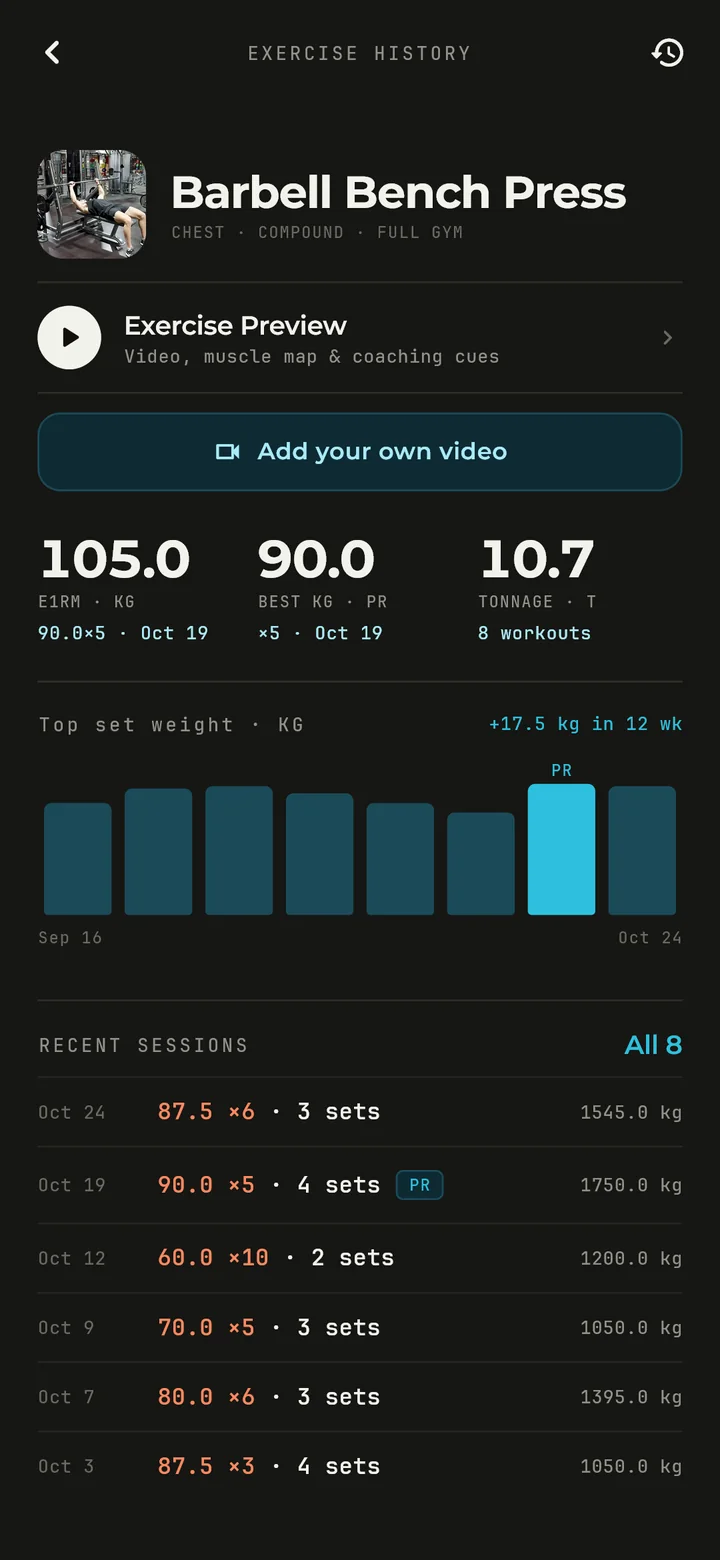
The gym makes this easier, especially for legs and back, which are hard to load with bodyweight alone. But training at home works too, particularly in the first months, and a set of dumbbells stretches it a long way. The best place is the one you'll actually show up to.
How many times a week to go
Three sessions a week is a great place to start: enough to make real progress, few enough to recover and build the habit. Two sessions a week still works, especially in the first month, and is far better than zero. Four or five is fine if you enjoy it and recover well.
The best number is the one you can keep for months. A three-day plan you follow beats a five-day plan you drop in week three.
What to do at the gym: a beginner week
Keep it simple. Each session works the whole body, starts with the big lifts and ends with cardio:
- A leg exercise: leg press or squat.
- A push: chest press or bench press.
- A pull: seated row or lat pulldown.
- A shoulder press.
- Some core work.
- Ten to fifteen minutes of cardio: incline walking, bike, rower or stairs.
Two to three sets of 8-12 reps per exercise, with a weight that leaves two or three reps in the tank. Machines are a great start because they guide the movement. Our gym weight loss program writes out a full first week like this, day by day, and how much weight to start with helps you pick the numbers.
How long should a gym session be to lose weight?
Forty-five minutes to an hour is a good target for a beginner. Even thirty minutes a day helps, as long as most of it is real work. Short rests make a session denser and a little more tiring, and around 60-90 seconds between sets of big lifts suits this goal well. More on that in how long to rest between sets.
Which equipment in the gym is best for weight loss?
The honest answer: the one you'll keep using. Rowers, bikes, stair machines and the treadmill on an incline all work, and the difference between them is small next to how often and how long you use them.
One myth to drop: no machine and no exercise burns fat from one particular place. Crunches don't melt belly fat. Fat goes from the whole body at once, in an order your genes decide.
How long until you see results
The scale jumps around by a kilo or more from day to day with water, salt and food in your stomach. Weigh yourself a few times a week at the same time of day and watch the trend over two or three weeks, not single numbers.
The first week or two often show a quick drop, which is mostly water. After that, a steady half a percent to one percent of body weight a week is a healthy pace: for someone weighing 80 kg, that's 0.4-0.8 kg. Clothes fitting differently and strength going up in the gym are often the first signs, usually within four to eight weeks.
Food, in one paragraph
You don't need a diet with a name. Eat about 300-500 kcal a day less than you burn, get protein at every meal, eat plenty of vegetables, and keep the foods you love in reasonable amounts so you can stick with it. If you have a medical condition, talk to a doctor before you change how you eat.
How Coach.AI builds a weight loss plan
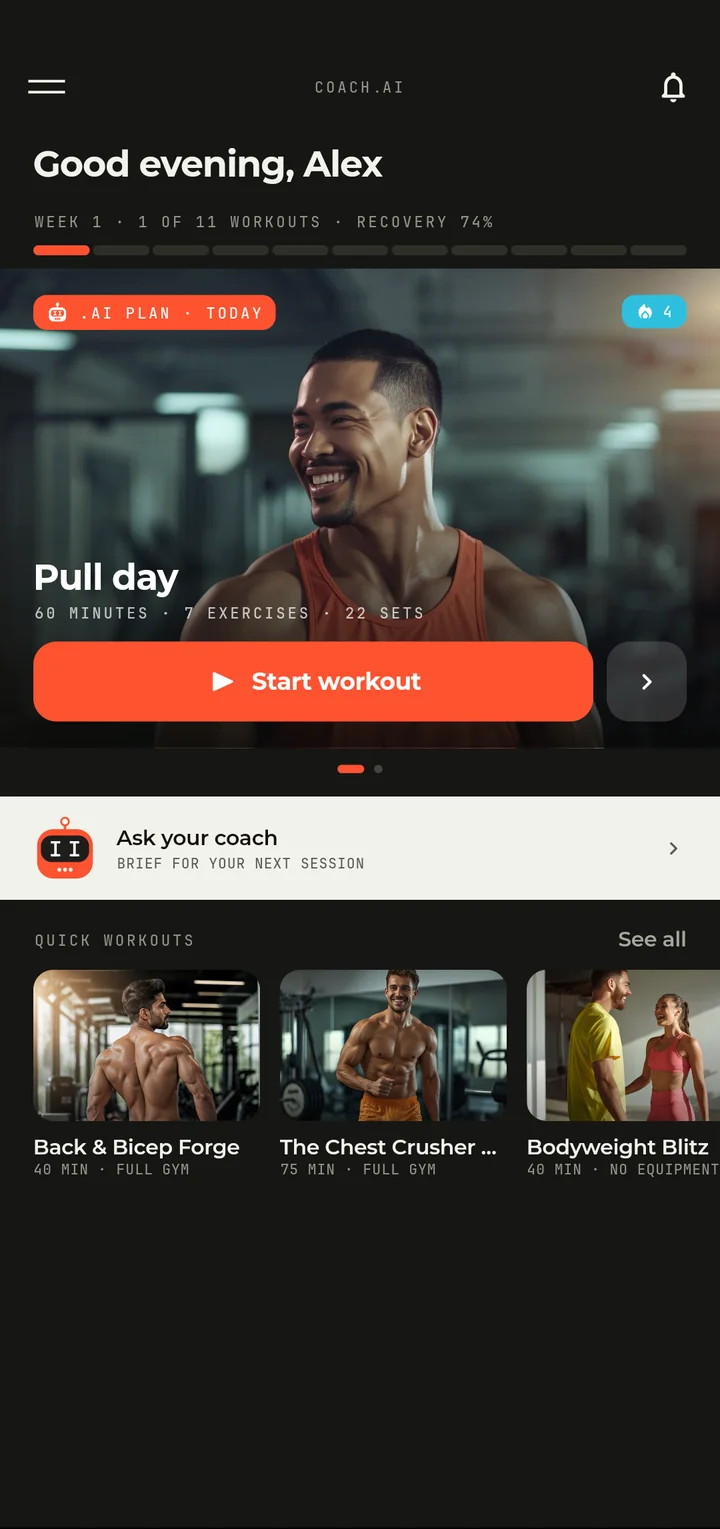
When you pick "Lose weight" as your goal, Coach.AI keeps the strength work in every session, with reps close to a muscle building plan, because that is what protects your muscle. The rest between sets gets shorter week by week, from 90 seconds to 60 on the big lifts, so the sessions get denser. Each session ends with cardio that starts at about 10 minutes and grows a little whenever the last one went well, up to about 30 minutes of cardio in a session.
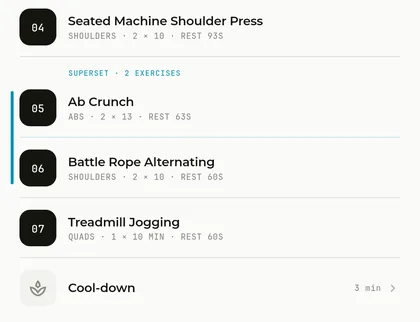
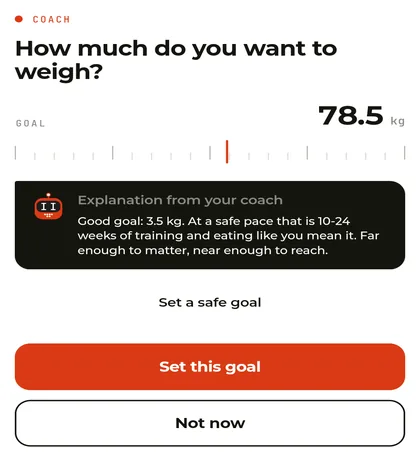
You choose 1-5 days a week and the days themselves, and every week after the first is built from the sets you logged. You also say where you train: a full gym, home with some equipment, or no equipment at all, and the plan uses only what you have. Bodyweight exercises grow by reps: a set that felt just right earns one more next time, an easy one two more, a hard one holds. On a weight loss plan that goes up to 30 reps, and then the coach suggests adding weight. On the progress screen you log your body weight and see a smoothed trend line instead of daily noise, set a target weight and get a forecast in weeks at a safe pace. You also get a daily calorie number with grams of protein, fat and carbs, worked out from your height, weight, age and activity. There is no meal plan: Coach.AI is about the training, and the number is a guide for your own food.
Questions people ask
Is going to the gym 2 times a week enough to lose weight?
Yes, if your food is in a small deficit. Two full body sessions keep your muscle and build the habit. Three gives you a bit more room, so add a day when two feels easy.
What's the fastest way to lose weight at the gym?
There is no fast way that lasts. Lift three times a week, add cardio after, eat a little less and be patient. Losing faster than about 1% of your body weight a week usually costs muscle and is hard to keep up.
Should I do weights or cardio to lose weight?
Both. Weights protect your muscle, cardio adds a little more burn. Do the weights first while you're fresh, then the cardio.
Why am I not losing weight even though I go to the gym?
Most often the food balance hasn't changed, or you are building a little muscle while losing fat, especially as a beginner. Watch the trend over three to four weeks, check how your clothes fit, and look at your calories honestly before changing the training.