Warm up in two steps. First five to eight minutes of light movement for the whole body, until you're slightly warm and your joints move freely. Then two or three lighter sets of the first big lift of the day, so your first working set is the first heavy one, not the first one.
Why a warm-up is worth ten minutes
Most people skip the warm-up for the same reason: it doesn't feel like training. You came to lift, and walking on a treadmill while everyone else is under a bar feels like waiting in line.
But a warm body moves better. Your joints get through their full range, the muscles you're about to load have blood in them, and your first sets feel like your first sets of the day, not like the moment you found out your hips were stiff. Ten minutes at the start usually buys you better sets for the rest of the hour.
The general warm-up: the whole body, every time
The first part is the same whatever you train today. You're not tiring anything out; you're switching the body on.
- Raise your pulse for a minute or two. A brisk walk, a bike, a rower, or skipping. You want to be slightly warm, not out of breath.
- Move every big joint. A bodyweight squat, a push-up or a few dips, something for your middle like a plank, and a pull of some kind: a band pull or a light row.
- A light shoulder movement. Side raises or a press with very light dumbbells, two or three kilos a hand. The point is the joint, not the weight.
- Go round once or twice. Short sets, 30-40 seconds each, no strain.
Why the whole body, even on leg day? Because nobody squats with only their legs. Your back holds the bar, your shoulders hold it in place, and a cold upper back on a heavy squat is exactly what you don't want.
Before leg day
After the general part, give the legs a little extra:
- A few more bodyweight squats, slow, as deep as is comfortable.
- Lunges or step-ups, a few per leg, to wake up the hips and the knees one side at a time.
- Glute bridges, to switch on the glutes before they have to work under a bar.
Then come the warm-up sets of your first lift. For a squat or a leg press, start with the empty bar or a light weight for about ten reps, and climb in two or three steps to your working weight, with fewer reps each time. The details and a worked example are in the article on warm-up sets.
Before bench press and upper body day
Shoulders are the joint to take care of here.
- Push-ups, a set of easy ones, to warm the chest, shoulders and triceps together.
- Band pull-aparts or a light row, so the back of the shoulder is ready to hold the bench steady.
- Light dumbbell raises, side and front, a few each.
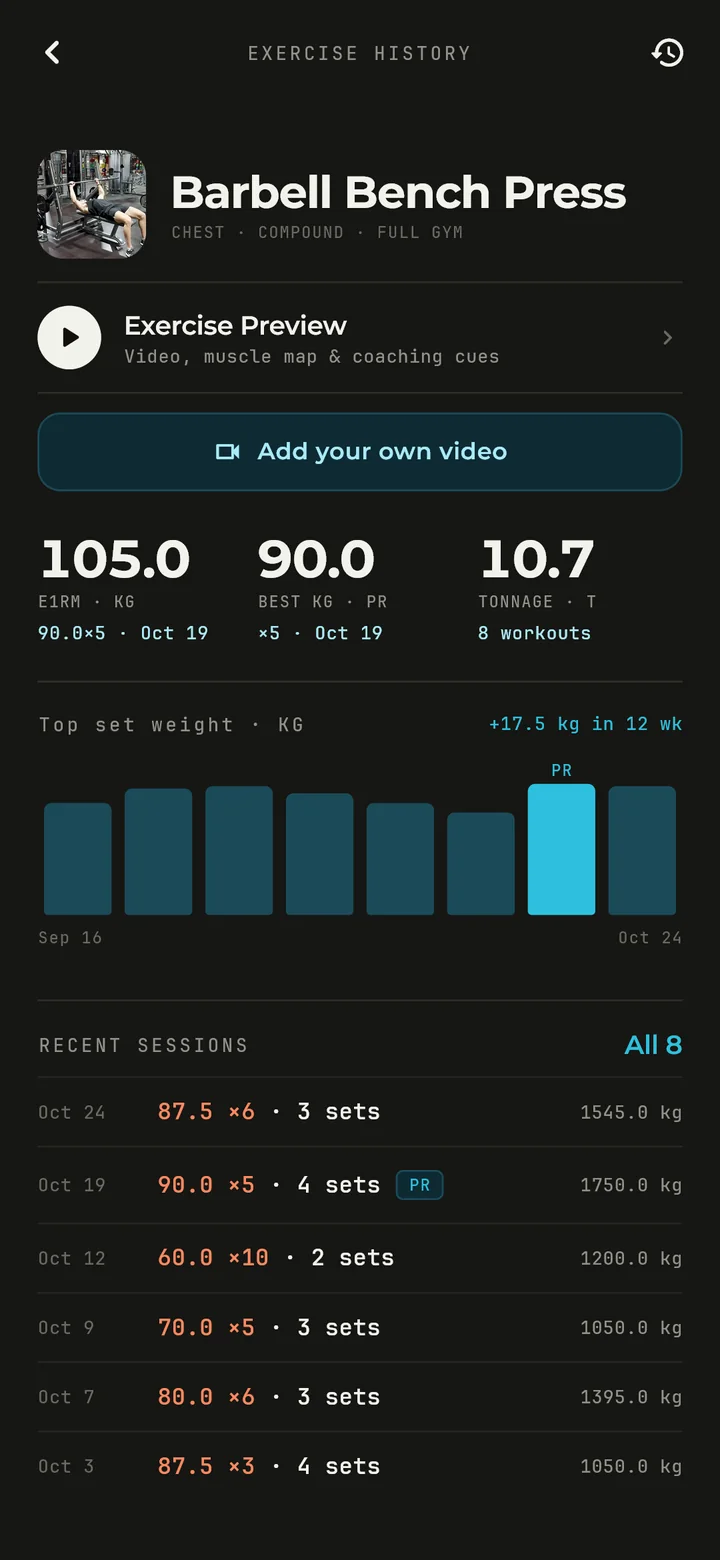
Then the bench press itself: the empty bar for ten reps, then roughly half your working weight, then about 70%, and you're there. If your working weight is heavy, add a step in between. The bench press calculator works out the ramp for your own number.
On a back day the order is the same: the general part, a few extra pulls (a band, a light lat pulldown), and warm-up sets of the first heavy row or pulldown.
How long should a warm-up take
About five to eight minutes for the general part, plus a few minutes of warm-up sets for your first big lift. On a heavy day, or in a cold gym, take longer. A warm-up that leaves you tired is too long or too hard: cut the reps, not the movements.
Cool-down: what actually helps
After the last set, a few calm minutes help you come down: an easy walk or a slow bike, a couple of minutes of relaxed holds for the muscles you trained, and some slow breathing. It won't stop tomorrow's soreness on its own, but it's a good way to finish, and the right moment for any stretching you like to do.
How Coach.AI does it
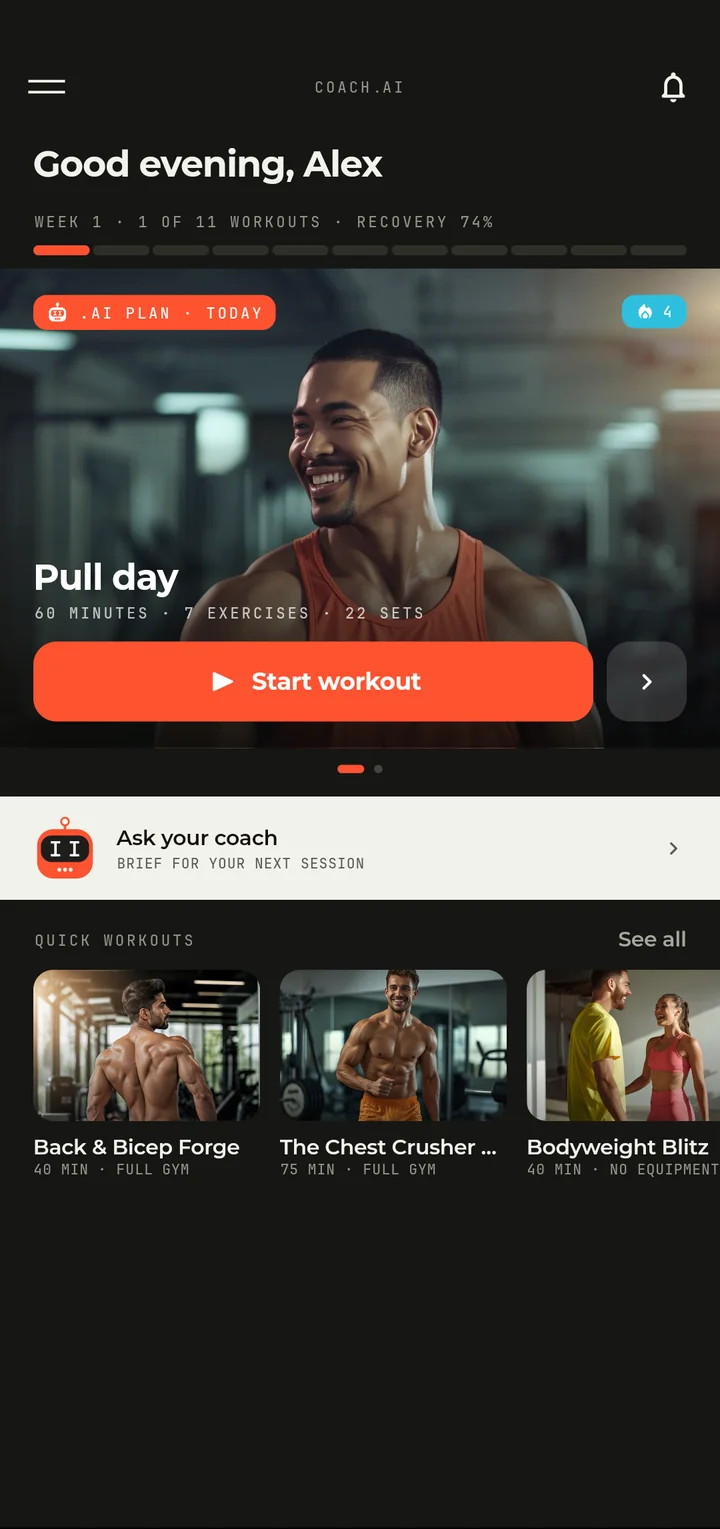
Before each workout the app runs a short warm-up on a timer: one move to raise your pulse, then a squat, a push, core work and a pull, a light shoulder movement when you have dumbbells, a back extension in the gym, and one more move for each of the two main muscle groups of the day. You can swap a move or skip the whole thing.
Then, before the first two exercises with weight, it puts two warm-up sets in front of your working sets: 50% of your working weight for 10 reps, then 70% for 5. From the third weighted exercise you get one set of 60% for 8 reps, because by then you're warm. Exercises with your own body weight and timed ones get no ramp.
The cool-down is an easy bout of cardio if your gym has a machine for it (skipped when the workout already ended with cardio), relaxed holds for what you trained, and a minute of guided breathing. The app doesn't have stretching exercises, so if you like to stretch, add it yourself at the end.
The app doesn't build a separate warm-up for each body part: the general part is the same circuit every day, and only its last moves follow the day. Your warm-up sets are what's built around the lift itself. If you want a ready week with every exercise, set and rest, the gym programs lay them out.
Questions people ask
Is it OK to skip the warm-up?
Once in a while nothing terrible happens, but your first sets will be worse and heavy work on cold joints is how small aches start. If time is short, cut the general part to three minutes and keep the warm-up sets.
Should I do cardio before lifting?
A few minutes of easy cardio is a good start to the general warm-up. A long, hard session is not, because it eats the energy your working sets need. Keep it short and light.
Do I need to warm up before every exercise?
No. The first big lift needs a proper ramp, and the second one usually a set or two. After that you're warm, and small exercises later in the workout often need nothing at all.
Is stretching a warm-up?
Moving through a range of motion is. Long, still stretches are not: they're better after the workout, when your muscles are warm and you're not about to lift heavy.